
The Ultimate Pixie Cut Guide
From Audrey Hepburn's iconic gamine crop to modern textured pixies, discover why this bold short style has captivated women for over 70 years — and find the perfect pixie for your face shape, hair texture, and lifestyle.
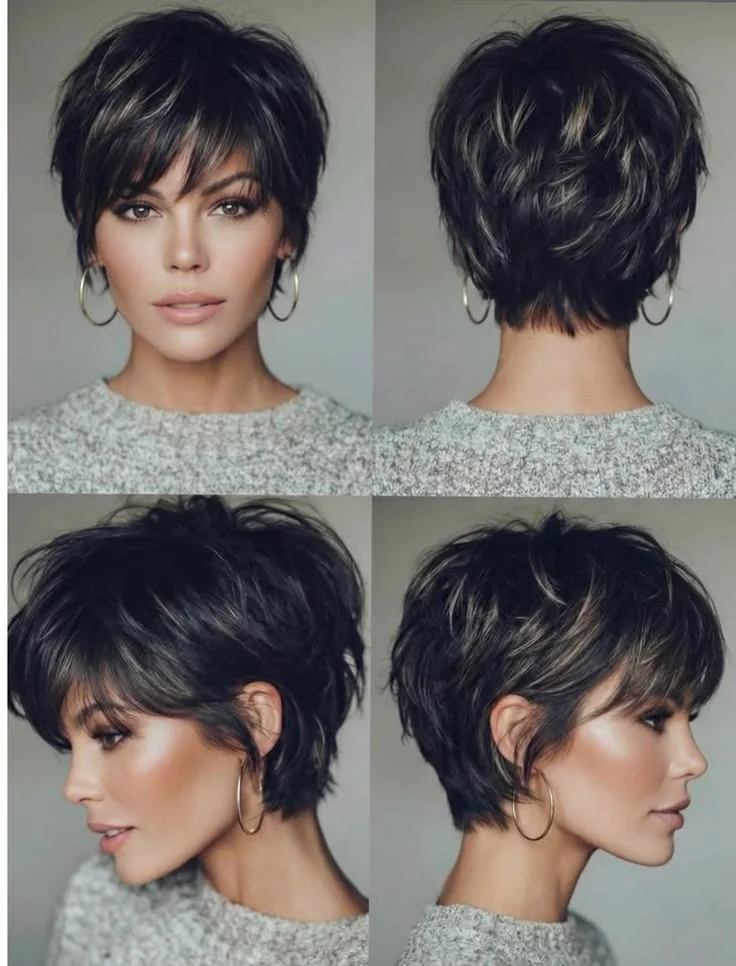
The Pixie Cut: 70 Years of the Most Liberating Haircut a Woman Can Get
In 1953, a 24-year-old Audrey Hepburn stood in front of a mirror in a scene from "Roman Holiday" and cut her own hair. The moment was fictional, but the ripple effect was real: within months, salons across America and Europe were fielding requests for "the Hepburn." Women who had never worn their hair above the shoulder were suddenly asking to have it cropped to the ears. One film had changed the conversation about what short hair on a woman could mean.
The pixie cut gets its name from the mischievous, elfin creatures of English folklore — small, quick, and startlingly present. Unlike the bob of the 1920s, which had been a collective movement (a uniform that said "I am modern"), the pixie was individualistic. A bob made you part of a generation. A pixie made you singular. It stripped away the camouflage of length and forced the eye to the face — the bone structure, the eyes, the neck. It was not a haircut for women who wanted to blend in.
That radical quality has kept the pixie alive for seven decades while other short styles have waxed and waned. Each generation rediscovers it: Mia Farrow in the 1960s, with a Vidal Sassoon precision cut so short it verged on androgynous; Twiggy's feathery, side-parted crop that defined Mod London; Halle Berry in the 1990s, whose textured, piece-y pixie with natural curl became the most-referenced celebrity haircut in salon consultation books worldwide; and most recently Zoë Kravitz, whose platinum micro-pixie with a skin fade at the temples pushed the style into futuristic territory.
The pixie's longevity is not an accident of fashion. It endures because it solves a real problem: it is the most efficient way for a woman to look deliberate, put-together, and striking without spending 45 minutes on her hair every morning. Five minutes with a texturizing product and your fingers, and you are done. But "efficient" is not the same as "easy." The pixie demands structural precision from the stylist — every millimeter shows, every growth pattern matters, and a bad pixie cut cannot be hidden in a ponytail. Understanding what you are asking for is the difference between a transformative cut and a regret you count down the weeks to grow out.
The pixie you choose should depend on four variables: your face shape, your hair texture, your willingness to visit the salon every 4–5 weeks, and your personal style threshold. A heart-shaped face with fine, straight hair and a taste for the dramatic might suit a micro-pixie with a shaved nape. A round face with wavy hair might call for an asymmetrical pixie with height at the crown and a long, sweeping fringe. The pixie is not one haircut — it is a family of cuts united by the principle of deliberate shortness. The rest is customization.
See it on yourself
Upload a photo and let AI show you the Pixie Cut
Click to upload your photo
Clear front-facing portrait
1 credit · No signup required
How the Pixie Evolved: 70 Years of Iconic Cuts
1953 — Audrey Hepburn in Roman Holiday
The gamine pixie that launched a thousand salon consultations. Hepburn's crop featured short, wispy layers with a delicate, feathered fringe. What made it revolutionary was not just the shortness — it was the softness. Previous short women's cuts had been severe; Hepburn's pixie was playful and feminine. It proved that short hair could be more beautiful than long hair on the right woman. Still the reference image most brought to salons for "classic pixie" today.
1968 — Mia Farrow by Vidal Sassoon
Sassoon reportedly spent seven hours cutting Farrow's hair for "Rosemary's Baby." The result was a razor-sharp, super-cropped pixie that sat somewhere between a crop and a boy's cut. It was androgynous, architectural, and utterly modern. Farrow's enormous eyes and delicate features prevented it from reading as masculine. This cut established that a pixie could be as precise and technical as any men's barber cut — and that precision cutting was a craft worth paying for.
1966 — Twiggy's Mod Crop
Lesley Lawson (Twiggy) paired her pixie with bold eye makeup and shift dresses, creating the Mod look that defined mid-60s London. Her pixie was longer on top than Hepburn's, with side-swept bangs and more volume at the crown. The key innovation: Twiggy's pixie was meant to move. It was cut to be photographed from all angles, with built-in texture that caught light differently as she turned her head. This was the first pixie designed for the camera age.
2000 — Halle Berry's Textured Pixie
The most commercially influential pixie of the last 30 years. Berry's signature cut — textured, piece-y layers on top with a close taper at the sides and nape — worked with her natural curl pattern rather than fighting it. Salon consultations referencing "the Halle Berry" peaked in the early 2000s and have never really stopped. Berry proved three things: that pixies work beautifully with textured hair, that a pixie can read as glamorous on a red carpet, and that the right short cut can become a personal brand.
2022 — Zoë Kravitz's Platinum Buzz-Pixie
Kravitz bleached her already-short pixie to platinum and shaved the temples down to a close fade, creating a futuristic, almost sci-fi silhouette. The cut combined elements of a micro pixie, an undercut, and a buzz cut — a hybrid that defied categorization. Paired with sharp eyeliner and minimal makeup, it was the most editorial pixie of the decade so far. It proved the pixie still has territory to explore: color, fade work, and gender-blurring lines are the current frontier.
Finding Your Pixie: Six Silhouettes Compared
The Gamine Pixie
The Hepburn archetype. Short, delicate layers everywhere with a soft, feathered finish. The nape is tapered but not shaved; the ears are partially covered by wispy strands. The fringe is irregular and light — not a solid curtain of hair but a suggestion of bangs that can be pushed aside or worn forward. This is the safest entry point for first-time pixie wearers. It works on oval and heart-shaped faces without modification. On square faces, soften the temple area further with point-cutting. On round faces, add a bit more height at the crown. Styling: a pea-sized amount of lightweight mousse worked through damp hair, air-dried or rough-dried with fingers. No brush, no heat. The gamine pixie is meant to look effortless — and it is, once cut correctly.
The Textured Crop
This is the Halle Berry zone. The crown is heavily point-cut (scissors held vertically, cutting into the ends at a 45-degree angle) to create separation and "piece-iness." The sides and nape are tapered closely with clippers — typically a #2 or #3 guard, blended up into the longer top. The fringe is cut dry and left long enough to sweep dramatically to one side. What distinguishes the textured crop from the gamine is attitude: where the gamine is soft and feminine, the textured crop is sharper, more architectural. It works on straight, wavy, and curly hair — in fact, natural curl texture makes a textured crop look more dimensional and intentional. The product call: a matte texturizing paste or clay, warmed between the palms and worked through the crown with fingertips. Do not slick it down. The texture is the point.
The Undercut Pixie
The highest-maintenance, highest-impact pixie variant. A section at the nape and/or temples is clipper-shaved to skin or a #0.5 guard, while the crown retains 2–3 inches of length. The contrast between the shaved zone and the voluminous top is the entire aesthetic — it reads as deliberate, editorial, slightly rebellious. Best suited to straight or fine hair (the shaved section must look clean, not fuzzy) and oval or heart-shaped faces. The undercut grows out visibly within 10–14 days, so this variant requires a salon visit every 2–3 weeks to maintain the contrast — or a willingness to let it grow into a standard pixie. If you color your hair, an undercut pixie is an ideal canvas for vivid or pastel shades because the short sections can be recolored quickly and the damage grows out fast.
The Bixie (Pixie-Bob Hybrid)
A transitional shape that sits between a pixie and a bob. The hair around the ears and nape is kept at 2–3 inches — long enough to read as "short bob" rather than "pixie" — while the crown is layered and textured like a pixie. The bixie is the strategic choice for someone who wants the face-framing benefits of a pixie but wants the option to grow it out into a bob within 3–4 months without an awkward in-between phase. It also works for women who find a classic pixie too severe but still want significant shortness. Styling is flexible: wear it piece-y and textured for a casual look, or smooth it with a flat iron for something sleeker. The bixie is the most forgiving pixie variant for round and square face shapes because the extra length at the sides softens the jaw.
The Asymmetrical Pixie
Built around a deep side part with dramatically more length on the heavier side. The longer side sweeps across the forehead (or tucks behind one ear on the shorter side), creating a diagonal visual line that elongates the face. The shorter side is typically tapered close to the head with scissors or a #3 guard. This variant is the go-to recommendation for round face shapes because the asymmetry disrupts circular visual patterns and introduces angularity. It also works brilliantly for women with strong jawlines who want to soften them — the asymmetry draws the eye diagonally rather than horizontally. The styling key: the long side must look intentional. Flat-iron it for a sleek, glossy sweep, or enhance natural wave with a sea salt spray for a more undone feel. Do not let it hang limp — the long side carries the entire look.
The Micro Pixie
The shortest, boldest pixie. Clipper-cut all over with guards #1 through #3, often with a subtle fade from the nape to the crown. The Mia Farrow / Zoë Kravitz end of the spectrum. A micro pixie leaves nothing to hide behind — every feature is exposed, every angle of the skull is visible. It is the most demanding pixie in terms of bone structure confidence and the most liberating in terms of daily effort (30 seconds with a styling cream, and you are out the door). The micro pixie works best on oval faces with defined cheekbones and a well-proportioned skull. It can work on heart-shaped faces if the top retains slightly more length to balance a narrower chin. It is not ideal for round faces unless you add asymmetry or an undercut to create angularity. Maintenance: weekly neckline cleanups with a detail trimmer, full salon visit every 3 weeks.